
Fixed asset management software for Kenyan organisations
Know what your organisation owns, who holds it and how its book value changes. VisionONE connects the asset register, depreciation, transfers and disposals with finance.
Asset register and custody
Keep acquisition details, categories, locations and custodians together, with supplier references and supporting documents.
Depreciation and posting
Set straight-line or reducing-balance depreciation, review monthly charges and post them to the finance ledger.
Transfers and verification
Record movement between branches, departments or custodians, and compare physical checks with the register.
Revaluation and disposals
Maintain revaluation, sale and write-off records, with approvals and the related gain or loss.
Asset reports for review
Review depreciation schedules, asset movements and balances by category, location or custodian.
Fleet and supporting records
Treat vehicles as fixed assets while Fleet manages operations. Bring policy and document requirements into the demo.
From acquisition to disposal
Request a free demoFollow one asset from acquisition to disposal
The register tells you who holds an asset. The schedule tells you its book value. Follow how those records change at each stage.
1 October 2025
Record the asset and its starting value
Add the capitalised cost, date available for use, category, location and custodian. In this example, workshop equipment starts with a recorded cost of KES 120,000.
Register record
- Asset reference
- ASSET-DEMO-018
- Recorded cost
- KES 120,000
- Available for use
- 1 Oct 2025
- Initial location
- WORKSHOP-DEMO-A
1 April 2026
Move custody without changing book value
After six monthly charges, the asset moves to another workshop and custodian. The transfer records who holds it and where; it does not itself change the KES 102,000 carrying amount.
Transfer record
- Transfer reference
- TRANSFER-DEMO-018
- New location
- WORKSHOP-DEMO-B
- New custodian
- CUSTODIAN-DEMO-B
- Carrying amount at transfer
- KES 102,000
30 September 2026 · before disposal
Review twelve monthly charges
A KES 12,000 residual value and a 36-month useful life give an illustrative straight-line charge of KES 3,000 a month. Twelve charges total KES 36,000, leaving KES 84,000 before disposal.
Review value record
- Method
- Straight-line
- Monthly charge
- KES 3,000
- Accumulated depreciation
- KES 36,000
- Book value before disposal
- KES 84,000
30 September 2026 · after the final charge
Record the disposal and its loss
Net disposal proceeds of KES 80,000 are below the KES 84,000 carrying amount. Recording the approved disposal gives a KES 4,000 loss and removes the asset’s cost and accumulated depreciation.
Dispose record
- Disposal reference
- DISPOSAL-DEMO-018
- Net proceeds receivable
- KES 80,000
- Disposal loss
- KES 4,000
- Book value after disposal
- KES 0
Read the register, schedule and disposal together
Three views of one asset make the handover between custody and finance easier to review.
Who holds the asset?
The same asset reference stays with the equipment when it moves. This snapshot shows its location and custodian after the April transfer, immediately before the September disposal.
- Recorded capitalised cost
- KES 120,000
| Field | Recorded value |
|---|---|
| Asset reference | ASSET-DEMO-018 |
| Description | Workshop equipment |
| Recorded cost | KES 120,000 |
| Available for use | 1 Oct 2025 |
| Location | WORKSHOP-DEMO-B |
| Custodian | CUSTODIAN-DEMO-B |
| Carrying amount | KES 84,000 |
The register snapshot is before disposal. Once disposal is recorded, this asset is closed and its remaining carrying amount is zero.
How does its value change?
Using the example’s KES 120,000 cost, KES 12,000 residual value and 36-month life, the straight-line charge is KES 3,000 per month. The quarter-end summary shows the result of those monthly charges.
- Depreciation across 12 monthly charges
- KES 36,000
| Quarter end | Book value |
|---|---|
| 31 Dec 2025After 3 monthly charges | KES 111,000 |
| 31 Mar 2026After 6 monthly charges | KES 102,000 |
| 30 Jun 2026After 9 monthly charges | KES 93,000 |
| 30 Sep 2026After 12 charges · before disposal | KES 84,000 |
Monthly charge: (KES 120,000 − KES 12,000) ÷ 36. The custody transfer does not alter this schedule.
What leaves the books?
Compare net disposal proceeds with the carrying amount immediately before disposal. Here KES 80,000 − KES 84,000 produces a KES 4,000 loss. Approval and the supporting evidence belong with the disposal record.
- Loss on this illustrative disposal
- KES 4,000
| Component | KES |
|---|---|
| Recorded cost | 120,000 |
| Less accumulated depreciation | 36,000 |
| Carrying amount before disposal | 84,000 |
| Net disposal proceeds receivable | 80,000 |
| Disposal loss | 4,000 |
The KES 80,000 proceeds are receivable; this example does not confirm a cash receipt. After disposal, the closed asset’s remaining carrying amount is zero.
Fictional example. Assumes full monthly charges from October 2025 to September 2026. It does not model tax, fees, impairment or revaluation. Your finance team should agree the accounting policy and period treatment.
Depreciation methods and posting
VisionONE supports straight-line and reducing-balance depreciation, monthly charges and finance-ledger posting.
Set the depreciation policy
Choose straight-line or reducing-balance, then agree the useful life, residual value and date available for use. Apply the policy approved by your finance team.
Review monthly postings
Review the period’s depreciation and its ledger posting. Keep the asset category and the related finance accounts aligned so asset balances can be reconciled.
Maintain book and tax separately
Book and tax schedules can differ. Set their policies separately and have the relevant finance or tax adviser review the treatment for your organisation.
Keep the policy visible. A physical transfer changes custody. A depreciation charge changes book value. Revaluation and disposal need their own recorded treatment.
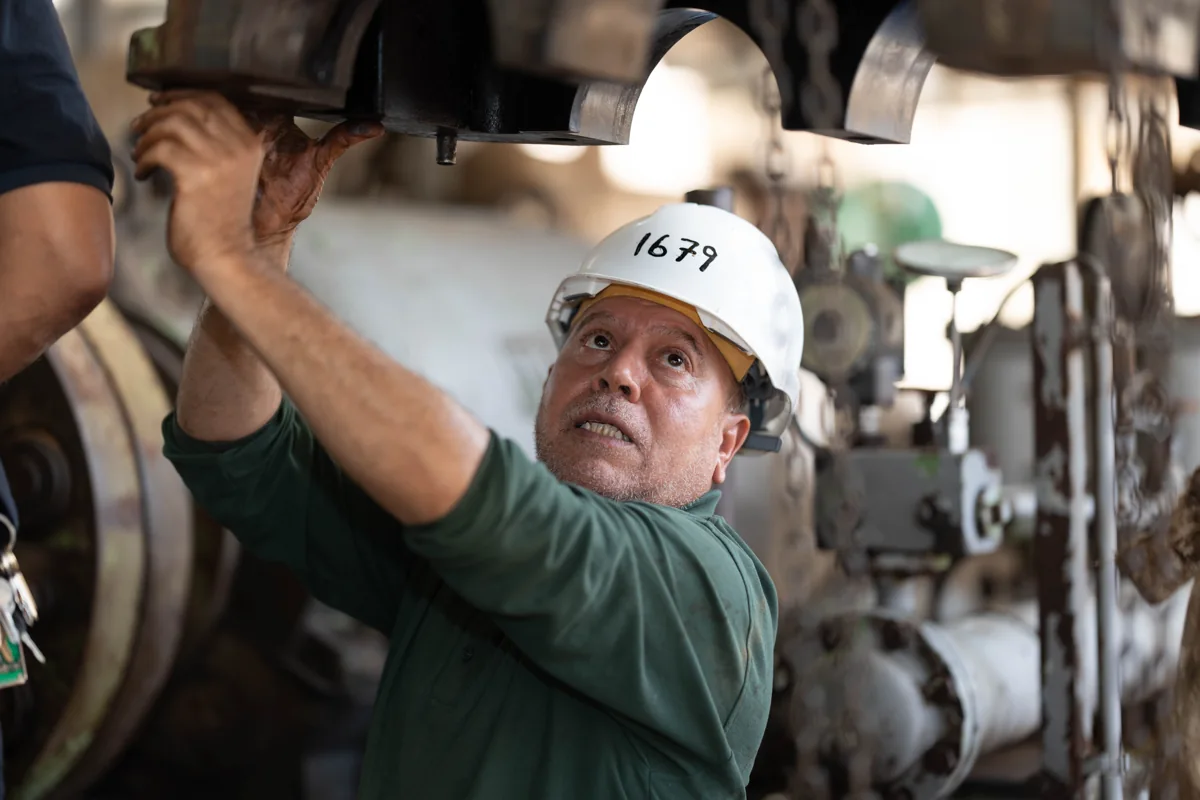
Transfers and verification
Keep the movement history when an asset changes hands. Use periodic physical checks to compare what is on site with what the register records.
Record where it moves
Maintain the branch, department or location and the transfer reference.
Record who takes custody
Keep the previous and new custodian with the handover details.
Review differences
Compare the physical check with the register and resolve missing, moved or incorrectly assigned items.
Illustrative transfer · 1 April 2026
- From location
- WORKSHOP-DEMO-A
- To location
- WORKSHOP-DEMO-B
- New custodian
- CUSTODIAN-DEMO-B
- Book value at transfer
- KES 102,000
Revaluation and disposal records
A value adjustment or a closed asset needs a clear record of what changed, when it changed and who approved it.
Record a revaluation
Retain the date, basis and approved value adjustment with supporting evidence. Have finance review the resulting accounting treatment.
Approve a sale or write-off
Record the disposal type, authorisation, date and supporting documents. Review the asset’s carrying amount against any net disposal proceeds.
Review the gain or loss
Keep the disposal result and removal of cost and accumulated depreciation visible in the records and related finance postings.
Use your own approval policy. Bring the people, roles and evidence required for transfers and disposals into the demo so the workflow can be agreed for your organisation.
Fleet and insurance record connections
Vehicles can sit in the fixed asset register while the Fleet module manages vehicle operations. Bring the policy references and supporting records you need to keep alongside those vehicles into the demo.
Connect assets with the records around them
Use the related modules for finance, vehicle operations and business documents. Confirm the scope you need during the demo.
Finance
Connect depreciation and disposal records with ledger postings and review the related balances.
Explore FinanceFleet Management
Keep asset ownership and book value alongside the operational view of your vehicles.
Explore Fleet ManagementDocument Management
Explore central document storage, permissions and search for the records your team works with.
Explore Document ManagementSet up the register with your team
Start with clean records and an agreed policy, then review a sample before rolling out.
Prepare the opening register
Review asset references, categories, costs, accumulated depreciation, locations and custodians. Bring a sample of your current register for the team to assess.
Agree policies and access
Confirm book and tax treatment, finance accounts, transfer and disposal approvals, and who may maintain or review each record.
Check a sample period
Walk through an acquisition, a custody transfer, monthly depreciation and a disposal. Reconcile the resulting records before agreeing the rollout.
Get a proposal for your scope
Pricing depends on the modules, users and implementation work agreed with the team. Request a free demo and a proposal for your asset and finance requirements.
Questions about fixed asset management
Check the accounting policy, custody workflow and verification requirements before you decide your scope.
Which depreciation methods are supported?
The published Fixed Assets module supports straight-line and reducing-balance depreciation, with monthly computation and ledger posting. Agree the useful life, residual value and period treatment with your finance team.
Can assets have locations and custodians?
Yes. Asset records include locations and custodians. Transfers between branches, departments or custodians retain the movement history.
How are disposals approved?
The published module states that transfers and disposals are approved and recorded. Bring your approval roles, evidence requirements and disposal scenarios into the demo to confirm the workflow for your organisation.
Can book and tax schedules differ?
Yes. VisionONE maintains book and tax depreciation separately. Their methods and treatment should follow the policies your finance and tax advisers agree; the example above illustrates book depreciation only.
Does the system support asset tags or scanners?
Confirm the required tags, scanning devices and verification method with the team before including them in your scope. A location or custody record by itself does not establish scanner or GPS support.
Can vehicles be managed as fixed assets?
Yes. Vehicles can be managed as fixed assets and connected to Fleet Management. Review asset accounting and vehicle operations together during the demo.
How do I get a demo and pricing?
Request a free demo through the contact page. The team can then propose the modules, users and implementation work for your requirements; no fixed price is assumed here.

Bring your asset register to the demo
Walk through acquisition, custody, monthly depreciation and disposal with the VisionONE team.
Free demo · no obligation